Table 5: 3 Key Steps in Processing Contaminated surgical Instruments
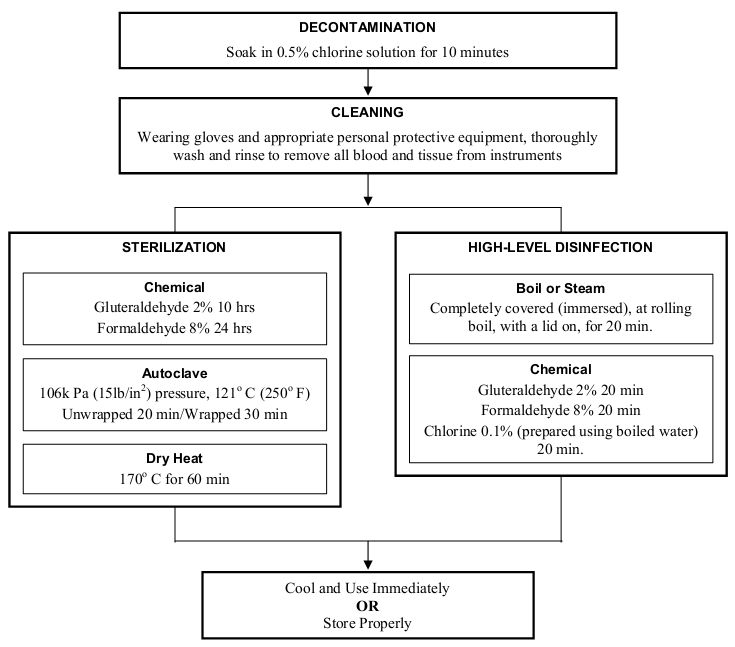
It is a process which achieves the complete destruction or killing of all microorganisms, including bacterial spores. Sterilization is principally accomplished by:
Steam sterilization is the most common and most preferred method employed for sterilization of all items that penetrate the skin and mucosa if they are heat stable. Steam sterilization is dependable, non toxic, inexpensive, sporicidal, and has rapid heating and good penetration of fabrics. The steam must be applied for a specified time so that the items reach a specified temperature. For unwrapped items:
For dry heat-sterilization to be achieved, a constant supply of electricity is necessary. Dry heat is preferred for reusable glass, metal instruments, oil, ointments and powders. Do not use this method of sterilization for other items, which may melt or burn.
| Holding Temperature | Sterilization Time (After reaching the holding temperature) |
|---|---|
| 180 ºC | 30 minutes |
| 170ºC | 1 hours |
| 160ºC | 2 hours |
| 149ºC | 2.5 hours |
| 141ºC | 3 hours |
| 121ºC | Over night |
Before deciding to use a chemical sterilizer, consider whether a more appropriate method is available. Chemical sterilizers are primarily used for heat- labile equipment where single use is not cost effective. Instruments and other items can be sterilized by soaking in a chemical solution followed by rinsing in sterile water. If an item is sterilized chemically, it should be used immediately after sterilization, to be sure that it is sterile.