3.7.1 Uses and action:
Anticholinergics are a class of medications that inhibit parasympathetic nerve impulses (blocks the neurotransmitter acetylcholine) by selectively blocking the binding of the neurotransmitter acetylcholine to its receptor in nerve cells. Anticholinergics are divided into three categories in accordance with their specific targets in the central and/or peripheral nervous system: antimuscarinic agents, ganglionic blockers, and neuromuscular blockers. This unit presents the pharmacology of drugs that block muscarinic receptors (a more precise term for this unit would be antimuscarinic). Atropine, scopolamine, and glycopyrrolate are the three most common antimuscarinic drugs used in anesthethesia practice. The clinical uses of these drugs in anesthesia relate to their effect on the cardiovascular, respiratory, cerebral, gastrointestinal, and other organ systems. Insert the fig no on the respective description
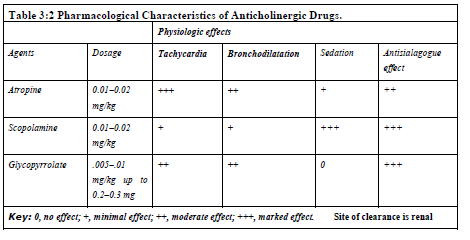
Anticholinergic competitively blocks binding by acetylcholine and prevents receptor activation. The tissue receptors vary in their sensitivity to blockade. In fact, muscarinic receptors are not homogeneous, and receptor subgroups have been identified: neuronal, cardiac, and glandular receptors. The extent of the anticholinergic effect depends on the degree of baseline vagal tone. Several organ systems are affected (Table 3.2).
3.7.2 Systemic action of anticholinergics
- Cardiovascular: blockade of muscarinic receptors in the sinoatrial node results in tachycardia. This effect is especially useful in reversing bradycardia due to vagal reflexes (e.g, baroreceptor reflex, peritoneal stimulation, or oculocardiac reflex). A transient slowing of heart rate in response to low doses of anticholinergics has been reported. of the paucity of direct cholinergic innervations of these areas despite the presence of cholinergic Large doses of anticholinergic agents can result in dilation of cutaneous blood vessels (atropine flush).
- Respiratory: The anticholinergics inhibit the secretions of the respiratory tract mucosa, from the nose to the bronchi. Relaxation of the bronchial smooth musculature reduces airway resistance and increases anatomic dead space. These effects are particularly pronounced in patients with chronic obstructive pulmonary disease or asthma.
- Cerebral: anticholinergic medications can cause a spectrum of central nervous system effects ranging from stimulation to depression, depending on drug choice and dosage. Stimulation may present as excitation, restlessness, or hallucinations. Depression can cause sedation and amnesia. Physostigmine, a cholinesterase inhibitor that crosses the blood–brain barrier, promptly reverses these actions.
- Gastrointestinal: salivary secretions are markedly reduced by anticholinergic drugs. Gastric secretions are also decreased, but larger doses are necessary. Decreased intestinal motility and peristalsis prolong gastric emptying time. Lower esophageal sphincter pressure is reduced. Overall, the anticholinergic drugs are not very advantageous in the prevention of aspiration pneumonia.
- Ophthalmic: anticholinergics cause mydriasis (pupillary dilation) and cycloplegia (an inability to accommodate to near vision.
- Genitourinary: anticholinergics may decrease ureter and bladder tone as a result of smooth muscle relaxation and lead to urinary retention, particularly in elderly men with prostatic hypertrophy.
- Thermoregulation: inhibition of sweat glands may lead to a rise in body temperature (atropine fever).
- The central anticholinergic syndrome: refers to central nervous system changes that range from unconsciousness to hallucinations. Agitation and delirium are not unusual in elderly patients. Other systemic manifestations include dry mouth, tachycardia, atropine flush, atropine fever, and impaired vision. Physostigmine effectively reverses central anticholinergic toxicity. An initial dose of 0.01–0.03 mg/kg may have to be repeated after 15–30 min.